

How Do Critical Infrastructure Operators Protect Data in Transit Across Fiber Networks?
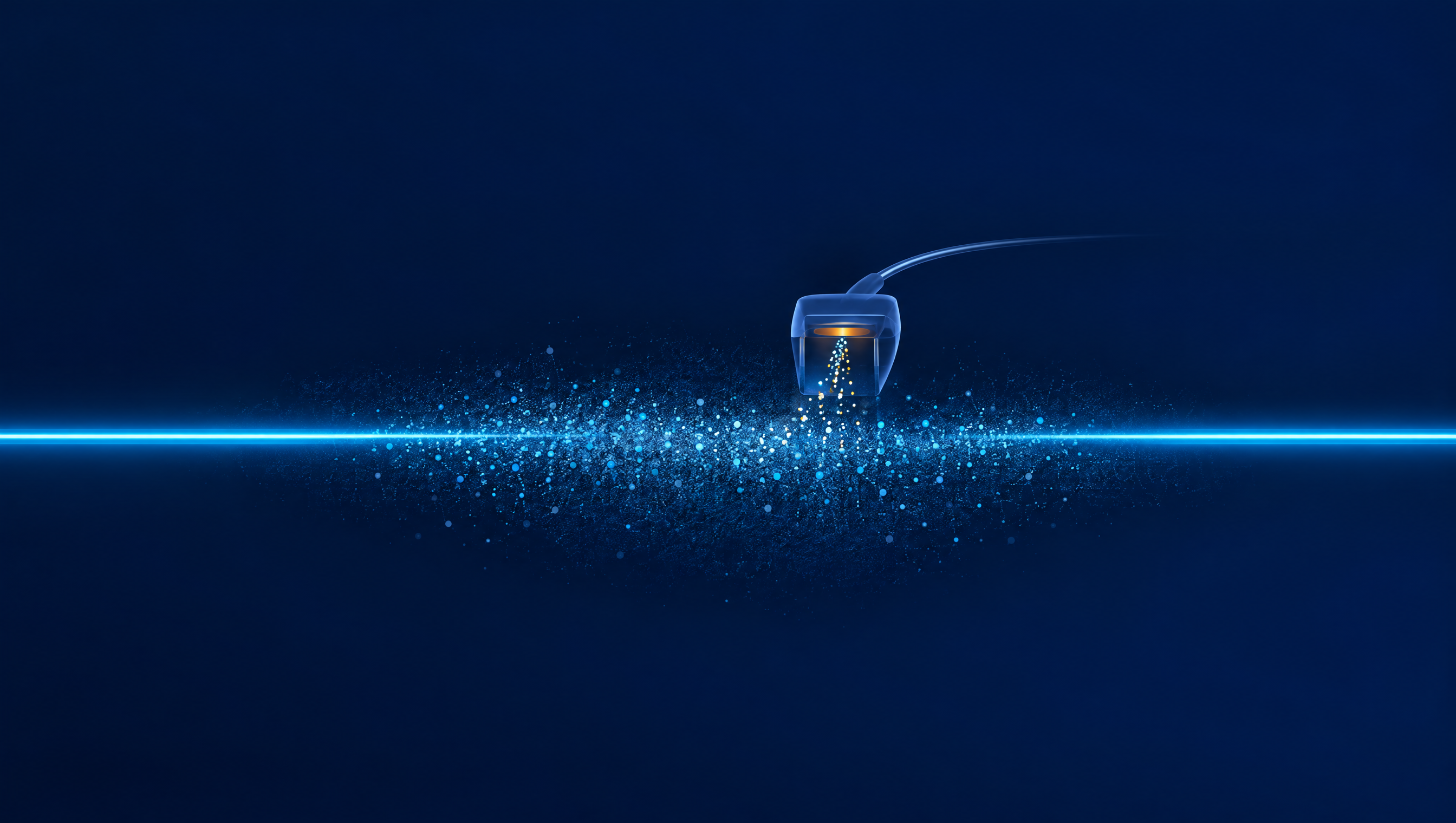
Critical infrastructure operators protect data in transit by encrypting it, limiting physical access to fiber routes, and monitoring those routes for tampering. NERC CIP-012 requires owners and operators of bulk electric system control centers to protect real-time data sent between those centers. NIS2 requires essential and important entities in the European Union to maintain documented policies on cryptography and encryption. Encryption makes recorded traffic unreadable today, but a tap on a fiber link still produces a full copy of the ciphertext. Carmel, our Photonic Layer Security platform, changes the signal on wide area network fiber links so a tap records optical noise instead of a copy.
Operators protect data in transit with controls that work together: encryption, restricted access to fiber routes, and monitoring for tampering. NERC CIP-012 requires owners and operators of bulk electric system control centers to protect real-time assessment and monitoring data sent between those centers. FERC approved a revised version, CIP-012-2, on May 23, 2024, and the revision adds requirements for the availability of those links. Yet, one gap remains in all of these controls. Encryption does not stop a tap from copying traffic, so an attacker can store the copied ciphertext and try to decrypt it later.
Fiber cables beyond the closed network walls
A wide area network (WAN) connects sites over long distances, such as control centers, substations, plants, and data centers. WAN traffic often crosses fiber that runs through street cabinets, manholes, and junction boxes. Data traveling between sites often crosses fiber the operator doesn’t own or control. Operators have less visibility and physical control over these paths than over traffic inside their own facilities, where dedicated security teams and access controls apply. At any of these points, a clip-on coupler can bend the fiber slightly so that some light leaks out to a receiver. A simple clip-on coupler, bought cheaply off the web for just a few hundred dollars, can silently harvest traffic from a secure fiber link.
Curious how taps are placed and what detection methods miss?
Controls operators apply today
Operators encrypt fiber traffic at several layers of the network. IPsec encrypts packets between sites. MACsec encrypts Ethernet frames on each link. Layer 1 optical encryption, offered by vendors such as Ciena and Adva, encrypts the whole wavelength, the light channel that carries the data. Yet at each layer, the encrypted ciphertext can still be harvested.
Physical controls and monitoring address the tap itself. Operators lock cabinets and manholes, log entries, and inspect routes for unexpected splices. Optical time-domain reflectometer (OTDR) tests send light pulses down the fiber and measure reflections to find changes along the route. Power monitoring watches for a drop in light level at the receiver. Both methods detect changes, and neither one blocks a copy of the signal from being leaked.
Read to find out how enterprises protect subsea and terrestrial fiber links from interception.
What encryption leaves on the fiber
Encryption protects the contents of recorded traffic, but it does not prevent the recording. Attackers who store encrypted copies use a practice called harvest now, decrypt later (HNDL). Executive Order 14412, signed June 22, 2026, names the risk of adversaries collecting information now and decrypting it once large-scale quantum computers are operational. The possibility of decryption is also heightened by AI advances that have been successfully weakening encryption algorithms further.
Post-quantum cryptography (PQC) replaces that key exchange with methods that NIST has standardized, and operators should complete the migration. EO 14412 sets December 31, 2030 for PQC key establishment on federal high-value and high-impact systems, excluding national security systems. Operators outside the government are not bound by that date but are still likely to use it for planning under the proposed FAR rule for covered federal contractors. PQC protects traffic sent after each system is upgraded. Traffic recorded before the upgrade stays recorded, and the 2030 date leaves the exposure time frame open for years.
Where Photonic Layer Security fits
Photonic Layer Security (PLS) protects the optical signal rather than the data inside it. CyberRidge’s Carmel implementation spreads the signal across a wide spectral band and applies optical keys that change continuously. It also places the signal below the noise level on the fiber. Our researchers report in a 2025 Journal of Lightwave Technology paper that no raw data remains for offline processing, including processing by quantum computers. A tap on the link therefore captures noise, and there is no copy to store.
Carmel is a uniquely designed platform for WAN fiber links. It installs as a matched pair of units, one at each end of a link, and runs at 100-400 Gb/s. Deployment takes weeks.
Choosing controls by how long data must stay secret
Rank each fiber link by two factors: how long its data must stay confidential and how physically exposed its route is. Links that carry grid operating data, control commands, or long-retention records rank highest. Apply encryption and access controls to every link, and finish the post-quantum migration on the schedule your regulator or contract sets. Add PLS to the highest-ranked WAN links, where a recorded copy would stay valuable for years.
Carmel protects data travelling across WAN fiber links from being harvested and eventually decrypted. By converting the optical signal into noise, any attempt to record data off the link results in the collection of white noise, leaving nothing to decrypt now, or in an advanced AI or quantum future.
Operating fiber links between control centers or sites? Visit CyberRidge to see how Carmel fits your network.
FAQs
Q: How is data in transit protected on fiber optic networks?
A: Operators combine encryption, physical access controls, and monitoring. Encryption can run at the packet, frame, or wavelength level, and physical controls limit who can reach cabinets and junction boxes. Monitoring such as OTDR testing detects changes in the fiber. Carmel adds Photonic Layer Security on wide area links, so a tap records noise instead of traffic.
Q: What does NERC CIP-012 require for communications between control centers?
A: NERC CIP-012 requires responsible entities to protect real-time assessment and monitoring data while it travels between control centers. Each entity documents its own protection plan. FERC approved CIP-012-2 on May 23, 2024, and the revision adds protection for the availability of that data. Carmel can serve as one control for the fiber links in such a plan, alongside encryption.
Q: Does encryption stop someone from tapping a fiber optic cable?
A: No. Encryption makes copied traffic unreadable, but it does not stop a tap from copying it. An attacker can store the encrypted copy and try to decrypt it later. Carmel uses Photonic Layer Security to address the copying step on wide area fiber.
Q: What is harvest now, decrypt later and why does it matter for critical infrastructure?
A: Harvest now, decrypt later is the practice of recording encrypted traffic today and decrypting it once quantum computers can break the key exchange. Executive Order 14412 names this risk. It matters most for data that must stay confidential for many years, such as grid operating data and network diagrams.
Q: What is Photonic Layer Security?
A: Photonic Layer Security (PLS) protects the optical signal that carries data through a fiber cable. Encryption protects the content of the data, while PLS targets the copying step. A tap on a PLS-protected link captures optical noise instead of traffic that can be stored for later decryption. Carmel is our PLS platform.
Q: Does Carmel replace encryption or post-quantum cryptography?
A: No. Carmel works alongside encryption and post-quantum cryptography. Those controls protect the contents of traffic, and Carmel prevents the recording of the signal on wide area fiber. Operators should complete their cryptographic migration as planned.
Q: Which networks does Carmel cover, and how is it installed?
A: Carmel covers wide area fiber links between sites. It does not cover local networks inside a building or personal networks around a device. It installs as an overlay matched pair of units with no changes to existing DWDM equipment, and deployment takes weeks.